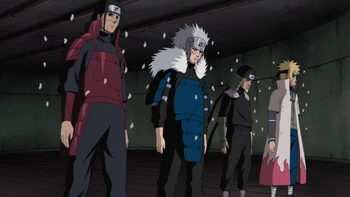
The Summoning: Impure World Reincarnation is a jutsu that binds the soul of a deceased person to a living vessel, restoring them as they were in the last moments of their lives in order to do their summoner's bidding. It was originally created by Tobirama Senju, some time after which he declared it a kinjutsu. Orochimaru would discover the technique decades later and improve on its use, while his subordinate Kabuto Yakushi nearly perfected it.
Before this technique can be performed, the user must first acquire some of the DNA of the person they intend to reincarnate. Kabuto remarks that this basically amounts to grave-robbing, although blood stains or organs salvaged after the target's death also work. [2] The soul of the intended reincarnated must also reside in the Pure Land; souls trapped in the stomach of the Shinigami, for example, cannot be reincarnated so long as they reside there. [3] A living sacrifice is also required for the reincarnated soul to use as a vessel. [2] If the souls are readily available in the Impure World, such as was the case with the first four Hokage who were freshly freed from the Shinigami's stomach, they can be reincarnated through this technique. [3]
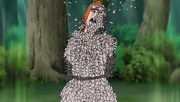 |
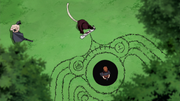
To actually perform the Impure World Reincarnation, the DNA of the person to be reincarnated is smeared on a special scroll. Once the scroll is activated, the remains spread out in the form of a special seal with the living sacrifice in the centre. Then dust and ash encase the sacrifice's body, giving them the same appearance that the reincarnated had at the time of their death; the process is apparently painful for the sacrifice. [2] The sacrifice's chakra signature is completely overridden with the chakra of the one being reincarnated. Although the sacrifice is still technically alive so long as the technique is active, their body will never again be theirs and the body will die when the reincarnated soul is released.
Although Tobirama was the technique's creator, his usage had two flaws: the reincarnated souls were greatly diminished in power compared to when they were alive and he could only control a small number at a time. [4] Orochimaru was able to somewhat mitigate both flaws, though the power they possessed still wasn't anywhere close to when they were alive. It was only upon his revival that Orochimaru was able to summon beings who were much closer to their original level of power. Ultimately, it is Kabuto who almost completely eliminates the flaws, bettering the Impure World Reincarnation to such a degree that the reincarnations are almost perfectly returned to how they were during life and he can control as many at a time as he wishes to, resources permitting. [2] His improvements, combined with the fact that performing the Impure World Reincarnation requires no chakra from the user, causes Kabuto to declare it the most powerful jutsu in history. [4]
Reincarnations can be mobilised like standard infantry, where they must travel to their destination. Alternatively, coffins that contain them can be summoned to a location, assuming someone is there to perform the summoning; the anime does not consistently require this. [5] Reincarnations can be recalled in a similar way, with a coffin emerging around them to take them back.
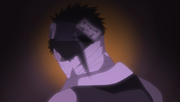
The only discretion a user needs to exercise for the Impure World Reincarnation is how much control to exert over the reincarnated soul. After first performing it the user is only able to restrict their movements. In general, this limited control is not an issue for the summoner, and they will typically "deactivate" the reincarnation, placing them in a coffin for storage and transportation until they're needed. However, when the perfected Impure World Reincarnation is used to revive somebody, there comes a possibility that they will be strong enough to resist this control; Tobirama was able to resist this control prior to Orochimaru using Hashirama's cells to strengthen the binding and Orochimaru notes Hashirama Senju could break free if he chose to, even with the enhanced binding from Hashirama's cells. [6]
In order to actually be able to control their actions, the user must implant a special talisman - generally attached to the end of a kunai - within the reincarnation's brain. The talisman's design determines how strong the control is:
Kabuto and Orochimaru are able to strengthen the bindings they use through external means: Kabuto siphons chakra from the cursed seal Anko Mitarashi is branded with; [12] Orochimaru uses Senju cells. [13] On a related note, any level of control creates a traceable chakra signature between the reincarnated soul and their summoner, allowing reincarnated sensors to trace the summoner's location. [14]

When first summoned, the body will appear grey and in a state of minor decay: marred by cracks and other imperfections. If the summoner chooses to, they can rejuvenate the reincarnation while planting their control talisman, restoring their complexion and reducing some of the imperfections; this is merely aesthetic and the signs of decay do not inhibit their abilities. An unavoidable characteristic of a reincarnated body is the darkened sclerae, with a soul that retains its personality having grey sclerae and a soul with a suppressed personality having black sclerae. [4]
A reincarnated individual will have all the abilities they had during their life, including kekkei genkai and kekkei tōta. They are physically restored as they were at the time of their death, including any physical handicaps they may have possessed, such as Nagato's damaged legs. Exceptions exist: illnesses they had will not be preserved, nor will any physical damage that contributed to their death. There is some inconsistency of whether or not foreign body matter will be restored as well: Hanzō retains the poison gland of the black salamander, but Madara Uchiha does not have access to Hashirama Senju's genetic material and thus Kabuto must artificially reproduce it for him.
Clothing is reproduced according to what they wore when they died, although it is merely a superficial aspect of their reincarnated body; armour offers no actual protection, being of the same ashen material as the rest of their body. Reincarnated members of Akatsuki are, however, outfitted with different cloaks than they used to wear. Weaponry is usually not retained and must instead be gathered by the summoner; the reincarnated Seven Ninja Swordsmen of the Mist only have access to those swords Kabuto is able to acquire. [15] One exception seems to be the Gold and Silver Brothers' Treasured Tools of the Sage of Six Paths, which are still seemingly stored within the brothers' bodies. [16]
The vast majority of the reincarnated were able to achieve the same power they had at life, such as Mū. But a few of the reincarnated, such as Madara Uchiha’s full abilities were limited by the technique. For example, even with the perfected Impure World Reincarnation; Madara's reincarnated body is successfully bound by the Sage Art: Gate of the Great God, which he easily breaks free of as soon as he is restored to life. [17] Likewise, there are some things a reincarnated body simply cannot do, such as access all the abilities of the Rinnegan or become the jinchūriki of the Ten-Tails. [18]
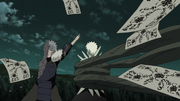
One of the major benefits of the Impure World Reincarnation is that it grants immortal bodies to those who are reincarnated. Any damage they receive will regenerate in time and, assuming the damage is not too debilitating, they can continue attacking even before their body recovers. This was one of the main purposes Tobirama created the technique for, as he would use one or more reincarnated souls to perform a series of Kamikaze-like attacks until the opposition was wiped out; [19] he created the Mutually Multiplying Explosive Tags specifically for this purpose. Reincarnated bodies do not bleed, except in those cases where blood is needed to perform the Summoning Technique. [20]
A second benefit is the limitless refilling of their diminished chakra reserves that the reincarnated individuals have access to; they can fight eternally and perform ordinarily physically demanding or chakra-intensive jutsu without issue, knowing their current reserves will infinitely refill. [21] They are still subject to certain inherent demands of the jutsu itself, such as the Second Tsuchikage's chakra supply being cut in half after using the Fission Technique [22] or only being able to create a certain number of clones. [23] Other side-effects may still manifest, as when Itachi Uchiha's eyes bleed from using his Mangekyō Sharingan, but he is not inhibited by it.
The reincarnated body can be further enhanced to "beyond their prime". When Madara Uchiha was brought back, Kabuto put his body through a selective evolution, combing the best attributes from different points of his life. In addition to his body being restored to its physical prime rather than the withered state it had when he died, he also retained the various abilities he gained only during the last years of his natural life; he retained the graft of Hashirama Senju's DNA so he could still access the First Hokage's abilities, and he has access to dōjutsu he gave up during his life. [24] The reincarnated jinchūriki similarly have their respective tailed beasts sealed back into them. [25]
Reincarnated individuals are immune to the Infinite Tsukuyomi. [26]
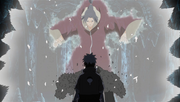
Killing the summoner does not release the Impure World Reincarnation, and in fact that can be considered inadvisable. [27] There are only three guaranteed ways to end the technique: [4]
When a soul is released from the Impure World Reincarnation, their body disintegrates back into dust and the sacrifice's corpse will be left lying in the debris. The soul may linger briefly - with their personality restored if it was being suppressed - to leave parting words or take final actions. Souls released by their summoner will be enveloped in light throughout the process. [31]
Even if the Impure World Reincarnation cannot be broken conventionally, reincarnated bodies can still be neutralised. During the Fourth Shinobi World War, the Allied Shinobi Forces develop the method of binding the reincarnations' bodies so that they can't move and then placing a seal on the bindings so that they no longer pose a threat. The Benihisago and Kohaku no Jōhei are able to seal the reincarnated bodies to such a degree that even the release of the jutsu won't affect the seal. Yin–Yang Release, as manifested in Truth-Seeking Balls, can negate the regenerative properties of reincarnated bodies, reducing their effectiveness and, if used to strike a vital spot, kill them for all intents and purposes. [32] The spirits of those reincarnated by the technique will remain damaged even if the jutsu is released, as shown with Minato Namikaze. Itachi also used his Sword of Totsuka to seal Nagato, his ultimate fate unclear after Itachi had Kabuto released the technique.
There are also other instances of a reincarnated body escaping their summoner's influence. Itachi Uchiha was targeted with Kotoamatsukami by Shisui's eye transplanted into a crow which was stored in Naruto, displacing Kabuto's commands with different orders. [33] Kabuto can regain control of Itachi by gaining access to the control talisman, [34] and in fact is still able to release him from the Impure World Reincarnation. Conversely, if the reincarnated soul knows the hand seals, they can sever the summoner's contract with them; in the anime, the seals are Snake → Ram → Boar → Dog → Tiger. [35] This grants them full control of their own actions, all the benefits of an immortal body, and prevents the summoner from releasing them from the Impure World Reincarnation. Madara Uchiha describes this as "the one risk of the technique". [21] Another way to take over the control of reincarnated bodies is through the usage of the Six Paths Technique, as in the case of Obito's Six Paths jinchūriki. Because of Obito's Black Receivers being embedded into the left side of each jinchūriki's chests, he was able to wrest Kabuto's control over the revived jinchūriki, and thus control the revived jinchūriki's near-perfectly. However, it should be noted that Kabuto is still able to release them from the Impure World Reincarnation.
| Name | Village of origin | Sacrifice used |
|---|---|---|
| Hashirama Senju | Konohagakure | Kin Tsuchi/White Zetsu clone |
| Hiruzen Sarutobi | Konohagakure | White Zetsu clone |
| Minato Namikaze | Konohagakure | White Zetsu clone |
| Osoi (Anime only) | Kumogakure | Konohagakure shinobi |
| Third Kazekage (Anime only) | Sunagakure | Unknown |
| Tobirama Senju | Konohagakure | Zaku Abumi/White Zetsu clone |
| Yota (Anime only) | Unknown | Unknown |
| Name | Village of origin | Sacrifice used |
|---|---|---|
| A | Kumogakure | Unknown |
| Ameyuri Ringo | Kirigakure | Unknown |
| Asuma Sarutobi | Konohagakure | Unknown |
| Blue B (Anime only) | Kumogakure | Unknown |
| Chen (Anime only) | Konohagakure | Unknown |
| Chiyo | Sunagakure | Konohagakure shinobi |
| Chūkaku (Anime only) | Fire Temple | Unknown |
| Chūkichi | Kirigakure | Unknown |
| Dan Katō | Konohagakure | Unknown |
| Daimaru (Anime only) | Sunagakure | Unknown |
| Deidara | Iwagakure | Konohagakure shinobi |
| Fū | Takigakure | Unknown |
| Fuguki Suikazan | Kirigakure | Unknown |
| Gari | Iwagakure | Unknown |
| Gengetsu Hōzuki | Kirigakure | Unknown |
| Ginkaku | Kumogakure | Unknown |
| Haku | Kirigakure | Unknown |
| Han | Iwagakure | Unknown |
| Hanzō | Amegakure | Unknown |
| Hayate Gekkō (Anime only) | Konohagakure | Unknown |
| Heiji (Anime only) | Amegakure | Konohagakure shinobi |
| Hizashi Hyūga | Konohagakure | Unknown |
| Inabi Uchiha (Anime only) | Konohagakure | Unknown |
| Itachi Uchiha | Konohagakure | Konohagakure shinobi |
| Jinin Akebino | Kirigakure | Unknown |
| Jinpachi Munashi | Kirigakure | Unknown |
| Jirōbō (Anime only) | Otogakure | Unknown |
| Kakuzu | Takigakure | Unknown |
| Kidōmaru (Anime only) | Otogakure | Unknown |
| Kimimaro | Otogakure | Unknown |
| Kinkaku | Kumogakure | Unknown |
| Kumo Reincarnated Shinobi (Anime only) | Kumogakure | Unknown |
| Kushimaru Kuriarare | Kirigakure | Unknown |
| Madara Uchiha | Konohagakure | Unknown |
| Mangetsu Hōzuki | Kirigakure | Unknown |
| Mū | Iwagakure | Unknown |
| Nagato | Amegakure | Unknown |
| Osoi (Anime only) | Kumogakure | Unknown |
| Pakura | Sunagakure | Unknown |
| Rasa | Sunagakure | Unknown |
| Rōshi | Iwagakure | Unknown |
| Sakon and Ukon (Anime only) | Otogakure | Unknown |
| Sasori | Sunagakure | Unknown |
| Shin | Konohagakure | Unknown |
| Suna Reincarnated Shinobi (Anime only) | Sunagakure | Unknown |
| Tatewaki (Anime only) | Land of Iron | Unknown |
| Tayuya (Anime only) | Otogakure | Unknown |
| Tonika Village Head (Anime only) | Tonika Village | Unknown |
| Toroi | Kumogakure | Unknown |
| Torune Aburame | Konohagakure | Fū Yamanaka |
| Utakata | Kirigakure | Unknown |
| Yagura Karatachi | Kirigakure | Unknown |
| Yota (Anime only) | Unknown | Unknown |
| Yugito Nii | Kumogakure | Unknown |
| Zabuza Momochi | Kirigakure | Unknown |